
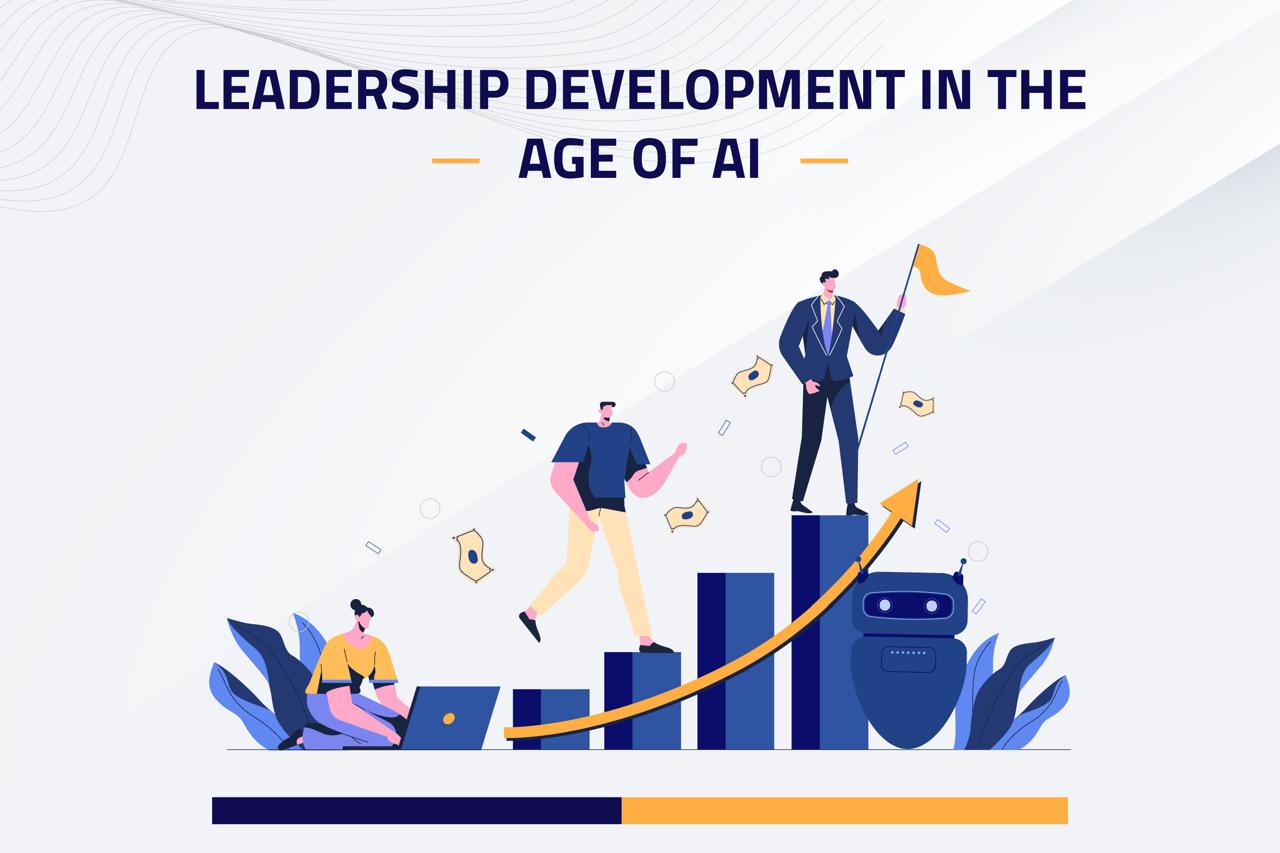
Leadership Development in the Age of AI
The rise of Artificial Intelligence is transforming how organisations operate, compete, and innovate. As AI becomes embedded in business processes, leaders are facing new expectations. They must not only manage people and strategy but also understand, leverage, and govern AI technologies effectively. This evolution raises the question: How does AI change leadership, and what does it mean for leadership development programs?
In the AI era, leadership is no longer just about vision and execution; it’s about enabling teams to work with intelligent systems while making ethical, data-driven decisions.
The New Leadership Paradigm
Modern leaders must navigate a complex landscape where technology and human skills intersect. Traditional leadership competencies, strategic thinking, communication, and decision-making remain critical. But the AI era demands additional capabilities, including:
- Digital and AI Literacy: Understanding AI tools, their potential, and limitations.
- Data-Driven Decision Making: Using analytics to inform strategy while balancing human judgment.
- Ethical AI Governance: Ensuring AI is used responsibly, transparently, and without bias.
- Adaptive Thinking: Leading in a world where AI continuously reshapes roles, markets, and processes.
These form the foundation of leadership skills for the AI era, enabling leaders to guide organisations through technology-driven transformation.
Why Traditional Leadership Development Programs Fall Short
Many modern leadership training programs focus on soft skills, executive presence, and managerial techniques. While these remain relevant, they often overlook the AI dimension:
- Leaders may lack exposure to AI-driven decision tools.
- Training may not address ethical, strategic, and operational implications of AI adoption.
- Development programs rarely integrate AI simulations or scenario-based learning for real-world applications.
This creates a gap between leadership potential and organisational needs in an AI-driven environment.
How AI Enhances Leadership Development
AI is not only transforming business, but it’s also reshaping leadership development programs themselves. AI-enabled learning platforms can:
- Personalize Leadership Learning Paths: Tailor content, coaching, and simulations to the leader’s experience, role, and skills.
- Provide Real-Time Feedback: Use analytics to highlight strengths, blind spots, and areas for growth.
- Simulate Complex Scenarios: Allow leaders to practice decision-making in AI-driven environments, including risk, ethics, and operational trade-offs.
- Predict Future Skill Needs: Anticipate emerging leadership competencies based on organisational strategy and technological trends.
These tools make leadership development more relevant, measurable, and adaptive to the AI era.
Building Leadership Skills for the AI Era
To develop leaders equipped for AI-driven organisations, programs should focus on four pillars:
- Strategic AI Understanding: Leaders must grasp how AI affects products, processes, and people.
- Human-AI Collaboration: Leading teams that include AI-driven workflows requires new communication and management skills.
- Ethical Decision Making: Leaders must enforce responsible AI use and anticipate ethical dilemmas.
- Agility and Resilience: Leaders must be comfortable navigating uncertainty, iterative change, and evolving markets.
When these pillars are embedded into modern leadership training, organisations cultivate leaders capable of leveraging AI as a strategic advantage.
Measuring Leadership Development Impact in the AI Era
Just as AI transforms leadership itself, it also enables better measurement of development outcomes:
- Track leaders’ ability to apply AI insights to decisions.
- Monitor improvements in team performance and adoption of AI tools.
- Assess ethical decision-making and compliance in AI-driven processes.
This data-driven approach ensures leadership programs deliver tangible business impact, rather than just classroom knowledge.
The Future of Leadership in an AI World
The AI era is redefining what it means to lead. Leaders who understand AI, foster ethical use, and develop adaptive, data-driven capabilities will guide organisations successfully through disruption.
Leadership development programs must evolve to meet these demands, integrating AI into curricula, learning experiences, and performance measurement.
The future of leadership is not human versus AI, it’s human with AI. Leaders who embrace this reality will be better equipped to inspire teams, drive innovation, and sustain competitive advantage.
Bottom Line
How AI changes leadership is not about replacing leaders; it’s about enhancing them. By focusing on AI leadership skills, modern development programs can prepare leaders to:
- Make informed, ethical decisions with AI insights
- Lead adaptable, high-performing teams
- Continuously learn and evolve alongside emerging technologies
In the age of AI, effective leadership is about collaboration, intelligence, and foresight, qualities that can be cultivated through thoughtful, AI-integrated development programs.
