Why Traditional Corporate Training Models Are Obsolete
For decades, traditional corporate training followed a predictable formula: classroom sessions, lengthy presentations, standardized modules, and periodic workshops. While this model once served organizations well, the modern workplace has changed dramatically. Rapid technological advancements, evolving job roles, and shifting employee expectations have transformed how people learn and work.
Today, many companies are discovering that conventional training approaches no longer deliver the results they once did. The evolution of workplace learning has made it clear that organizations need more agile, personalized, and continuous learning systems. Understanding why old training models fail helps businesses move toward more effective modern L&D models that truly support workforce development.
Learning Is No Longer a One-Time Event
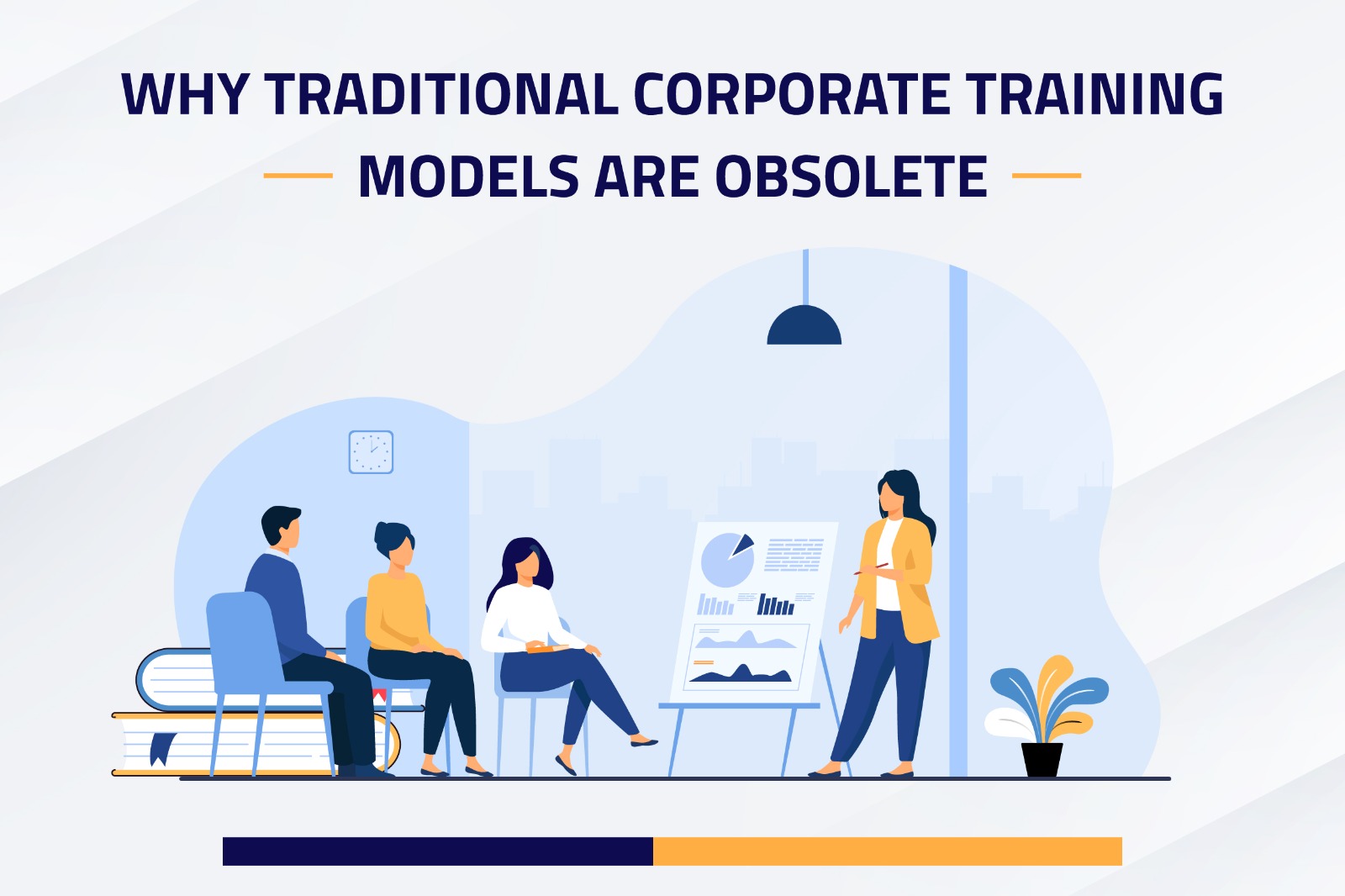
Traditional training models treat learning as a scheduled activity. Employees attend workshops or seminars, complete mandatory modules, and then return to their daily responsibilities. This “event-based” approach assumes that knowledge can be absorbed in isolated sessions.
However, the modern workplace moves too quickly for this model to work. Skills become outdated faster than ever, especially in industries shaped by digital tools and automation. Employees need continuous access to knowledge rather than occasional training sessions.
The evolution of workplace learning emphasizes ongoing development. Instead of waiting for annual workshops, employees benefit from learning that is embedded directly into their workflows.
One-Size-Fits-All Training No Longer Works
Another major limitation of traditional corporate training is its standardized approach. Large groups of employees receive the same training, regardless of their roles, experience levels, or career goals.
In reality, different employees require different skills and learning paths. A marketing professional, a software developer, and a customer service specialist all have distinct training needs. When training programs fail to account for these differences, employees often disengage or fail to apply what they learn.
Modern L&D models focus on personalized learning experiences. By leveraging digital platforms and learning analytics, organizations can deliver targeted content tailored to individual roles and skill gaps.
Information Retention Is Low
One of the most common reasons why old training models fail is the lack of long-term knowledge retention. Traditional training sessions often involve hours of presentations, dense slides, and passive listening.
Research consistently shows that people forget most of what they learn in such environments within days or weeks. Without reinforcement, practical application, or continuous access to resources, the knowledge simply fades.
Modern learning approaches address this challenge by incorporating microlearning, interactive modules, and real-time knowledge support. Instead of overwhelming employees with large amounts of information at once, learning is delivered in smaller, more manageable segments.
Employees Expect On-Demand Learning
Today’s workforce has grown accustomed to instant access to information. Whether searching for tutorials online, watching educational videos, or using digital platforms to solve problems, employees increasingly prefer learning that is available exactly when they need it.
Traditional training programs, which rely on scheduled sessions and fixed curriculums, cannot meet these expectations. Employees may face challenges weeks or months after completing a training course, yet the learning resources are no longer easily accessible.
The evolution of workplace learning emphasizes on-demand knowledge. Digital learning platforms allow employees to access training materials whenever they encounter a challenge, making learning far more practical and relevant.
Workplace Skills Are Changing Faster Than Ever
The pace of change in today’s economy is unprecedented. Automation, artificial intelligence, and digital transformation are continuously reshaping job roles across industries.
In this environment, static training programs quickly become outdated. By the time traditional courses are designed, approved, and delivered, the skills they teach may already be partially obsolete.
Modern L&D models focus on adaptability. They emphasize agile content creation, real-time updates, and learning programs that evolve alongside industry trends.
Organizations that rely solely on outdated training methods risk falling behind competitors that are investing in dynamic, future-ready learning systems.
Collaboration and Peer Learning Are Underutilized
Traditional corporate training often positions learning as a top-down process. Experts deliver information, and employees absorb it.
However, much of the most valuable learning in modern workplaces happens informally through collaboration. Employees share insights, solve problems together, and learn from each other’s experiences.
New learning models encourage peer-to-peer knowledge sharing through digital platforms, discussion forums, and collaborative projects. By creating spaces where employees can exchange ideas, organizations unlock a powerful source of collective intelligence.
Learning Must Be Integrated With Work
One of the biggest shifts in the evolution of workplace learning is the integration of learning directly into everyday work activities.
Instead of separating training from productivity, modern organizations embed learning tools within their operational systems. Employees can access quick guides, instructional videos, or AI-powered support while completing tasks.
This “learning in the flow of work” approach ensures that knowledge is applied immediately, reinforcing retention and improving performance.
The Future of Workplace Learning
The decline of traditional corporate training does not mean that structured learning is disappearing. Rather, it is evolving to match the needs of a rapidly changing workplace.
The most successful organizations are adopting modern L&D models that prioritize flexibility, personalization, and continuous development. They combine digital platforms, data-driven insights, and collaborative learning environments to support employees throughout their careers.
Understanding how workplace learning is changing is essential for companies that want to build resilient, future-ready workforces. In a world where skills evolve constantly, learning must become an ongoing journey rather than a periodic event.
Organizations that embrace this shift will not only develop stronger employees but also create cultures of curiosity, adaptability, and innovation—qualities that define successful businesses in the modern era.
