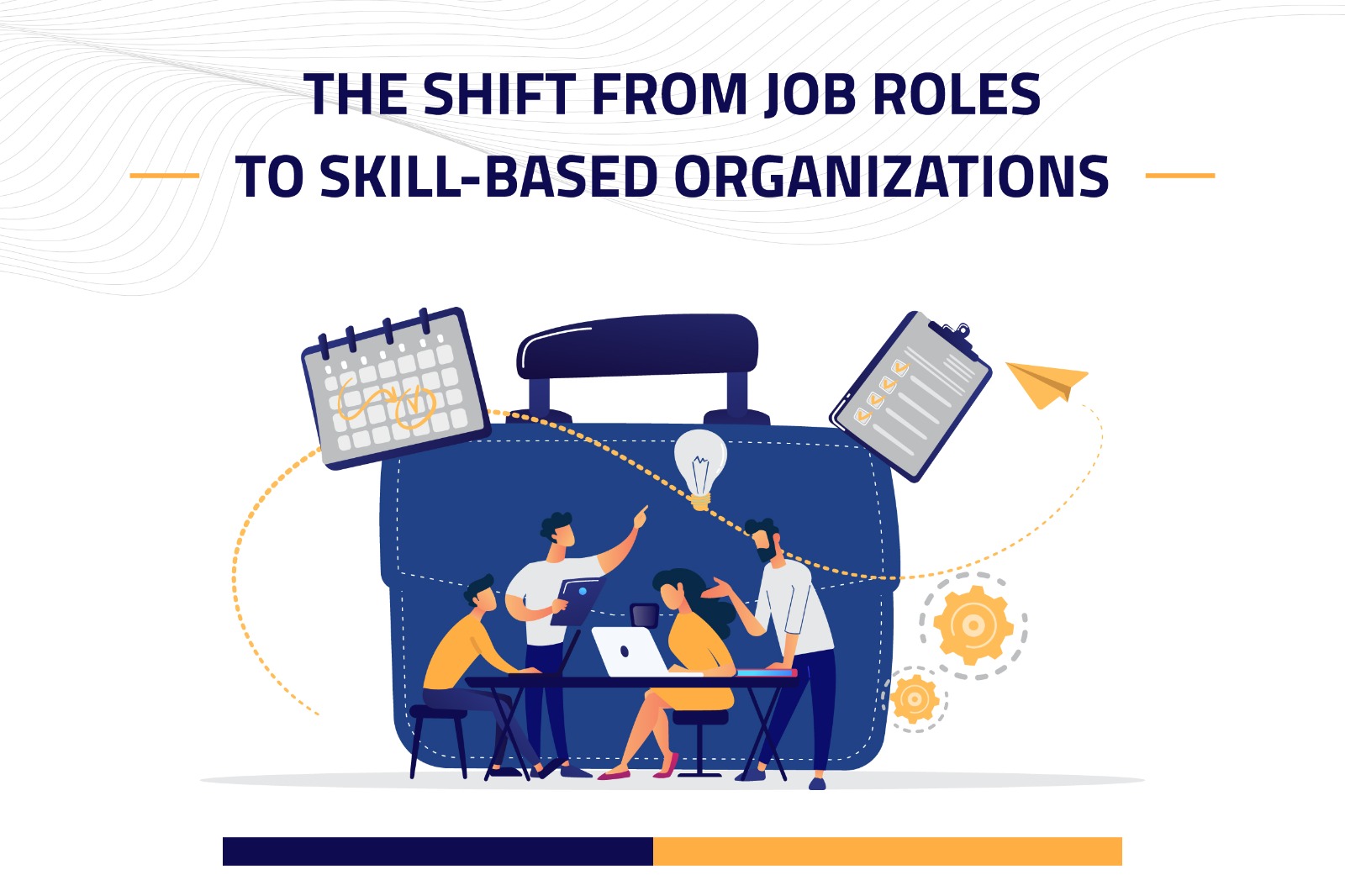
The Shift from Job Roles to Skill-Based Organizations
For decades, organizations have structured their workforce around fixed job roles. Employees were hired for specific titles, responsibilities were clearly defined, and career progression followed a predictable ladder. However, the rapid pace of technological change, automation, and evolving business demands are pushing companies to rethink this model.
Today, many organizations are shifting toward a skill-based organization, where the focus is not just on job titles but on the actual capabilities employees bring to the table. In a skills-based workforce, talent is evaluated, deployed, and developed based on skills rather than rigid roles. This shift is fundamentally changing how companies hire, manage, and grow their teams.
Understanding what is a skill-based organization and why companies are moving to skill-based models helps explain why this approach is becoming a major workforce trend.
What Is a Skill-Based Organization?
A skill-based organization structures its workforce around skills rather than traditional job titles. Instead of assigning employees to fixed roles with narrow responsibilities, companies identify the skills each employee possesses and match them to projects, tasks, or evolving business needs.
In this model, employees are not limited by their official designation. Someone hired as a data analyst, for example, might also contribute to product strategy if they have relevant analytical or business skills.
This approach emphasizes skills over job titles, allowing organizations to become more flexible and responsive to change.
Rather than asking, “Who holds this role?” companies ask, “Who has the right skills to solve this problem?”
Why Traditional Job Structures Are Becoming Outdated
Traditional job structures were designed for stable environments where responsibilities rarely changed. Employees performed the same tasks for years, and organizations could rely on clearly defined job descriptions.
However, modern businesses operate in far more dynamic environments. New technologies emerge rapidly, customer expectations evolve constantly, and companies must adapt quickly to remain competitive.
Rigid job roles can slow down this adaptation. When responsibilities are tightly tied to job titles, organizations struggle to redeploy talent efficiently. Employees may possess valuable skills that remain underutilized simply because those abilities fall outside their formal role.
The shift toward a skills-based workforce addresses this limitation by unlocking the full potential of employee capabilities.
Greater Workforce Agility
One of the primary reasons companies are moving to skill-based models is the need for agility. Businesses must respond quickly to new challenges, opportunities, and market shifts.
In a skill-based organization, managers can assemble teams based on the specific skills required for a project rather than relying solely on departmental structures.
For example, launching a new digital product may require expertise in data analytics, design thinking, marketing, and software development. Instead of limiting the project to a single department, organizations can bring together employees from across the company who possess these skills.
This flexibility allows organizations to move faster and innovate more effectively.
Better Talent Utilization
Many employees possess skills that extend far beyond their job descriptions. However, traditional structures often prevent organizations from recognizing or using those abilities.
A skills-based workforce helps companies map and track employee capabilities more accurately. This enables managers to assign work based on expertise rather than hierarchy.
As a result, organizations can make better use of existing talent, reducing the need to constantly hire new employees for every emerging skill gap.
For employees, this also creates opportunities to contribute in areas where they are passionate and capable, even if those areas fall outside their official title.
Improved Learning and Career Development
The emphasis on skills over job titles encourages continuous learning. Instead of focusing only on promotions or title changes, employees are motivated to build new capabilities that expand their professional value.
Skill-based organizations often invest heavily in learning platforms, training programs, and internal mobility initiatives. Employees can develop new skills and apply them across different projects, departments, or roles.
This approach creates more dynamic career paths. Rather than climbing a single ladder, employees move across different experiences that help them build a broader skill portfolio.
Such opportunities can significantly improve engagement and retention, especially among younger professionals who value growth and flexibility.
Stronger Internal Mobility
Internal mobility is another major advantage of the skill-based organization model. Companies often struggle to fill open roles quickly, even when qualified talent already exists within the organization.
By maintaining a clear understanding of employee skills, organizations can identify internal candidates for new opportunities more effectively.
For example, an employee in marketing who has developed strong data analysis skills could transition into an analytics-focused role. Without a skills-based system, that potential might remain hidden.
Internal mobility not only reduces hiring costs but also strengthens employee loyalty and career satisfaction.
Data and Technology Enable the Shift
Advances in HR technology are making skill-based workforce models more practical. Modern talent platforms can track employee skills, certifications, training progress, and project experience in real time.
These tools allow organizations to build comprehensive skill inventories across their workforce. Managers can quickly identify individuals with specific capabilities and match them to relevant tasks or initiatives.
Artificial intelligence is also being used to recommend training programs, career paths, and project assignments based on employee skills and organizational needs.
Technology is therefore playing a critical role in making the skills-based workforce approach scalable and effective.
The Future of Work
The move toward skills over job titles reflects a broader transformation in how organizations think about talent. As work becomes more project-based and technology continues to evolve, flexibility and adaptability are becoming essential.
Understanding what is a skill-based organization reveals why so many companies are embracing this model. By focusing on skills rather than rigid job structures, businesses can unlock hidden talent, improve workforce agility, and support continuous learning.
The shift from traditional job roles to skill-based organizations is not just a trend—it represents a fundamental change in how work is organized. Companies that successfully build a skills-based workforce will be better positioned to innovate, adapt, and thrive in an increasingly complex business environment.
