
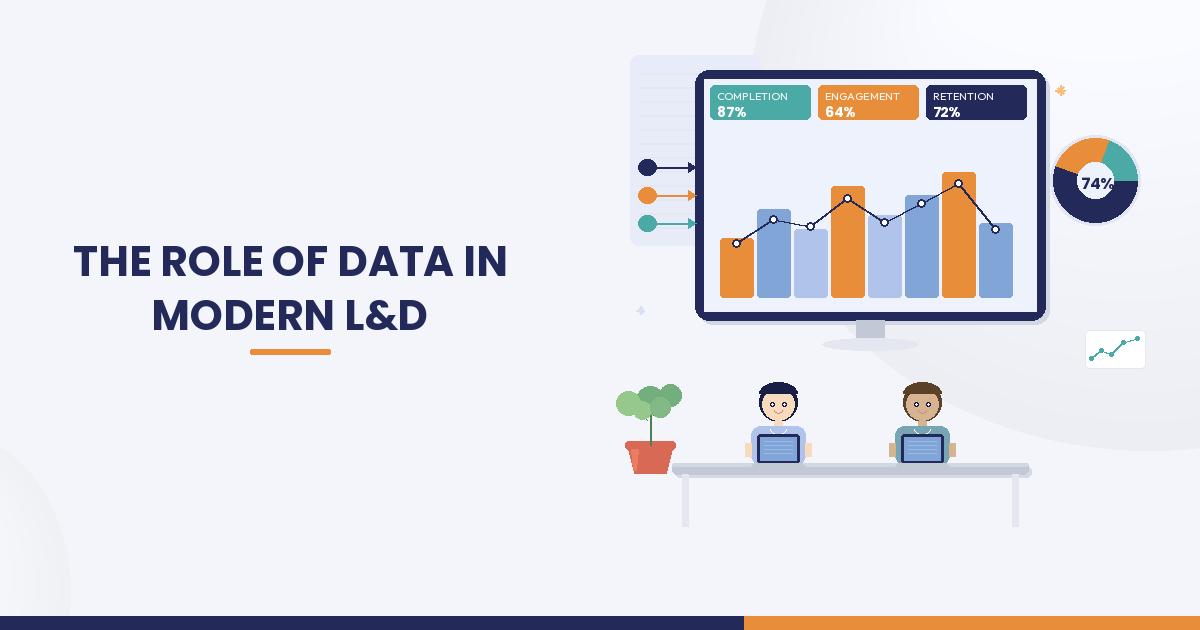
The Role of Data in Modern L&D
Learning and Development (L&D) has evolved significantly over the past decade. What was once primarily focused on delivering training sessions is now a strategic function that shapes workforce capability and organizational growth. In this transformation, data has become a powerful driver of smarter and more effective learning programs.
Today, organizations rely on learning analytics and L&D data insights to understand how employees learn, what skills they need, and how training programs impact performance. Instead of relying on intuition or outdated evaluation methods, modern L&D teams use data to design targeted, measurable, and scalable learning experiences.
Understanding how data improves training is essential for organizations that want to build a future-ready workforce.
Moving Beyond Traditional Training Metrics
Traditionally, L&D programs were measured using simple metrics such as course completion rates, attendance, or feedback surveys. While these indicators provide some insight, they rarely reveal whether training actually improves skills or business performance.
Modern learning programs go deeper by analyzing multiple layers of data. Learning analytics explained in simple terms refers to the collection, analysis, and interpretation of data generated during the learning process. This includes information about learner engagement, knowledge retention, skill development, and performance outcomes.
With the right learning data strategy, organizations can move from basic reporting to meaningful insights that guide better decision-making.
Personalizing Learning Experiences
One of the biggest advantages of using data in L&D is the ability to personalize learning for employees.
Not every employee has the same skill level, career goals, or learning preferences. By analyzing learner behavior, organizations can tailor training programs to individual needs. Data can reveal which courses employees engage with the most, how quickly they progress through modules, and where they struggle.
These L&D data insights allow organizations to recommend relevant courses, suggest skill paths, and deliver content that matches each learner’s pace and interests. Personalized learning not only improves knowledge retention but also increases motivation and participation.
When employees feel that training is relevant to their growth, they are more likely to invest time and effort into learning.
Identifying Skill Gaps
Modern businesses operate in rapidly changing environments where skill requirements evolve quickly. Data plays a crucial role in identifying skill gaps across the workforce.
Through learning analytics, organizations can track employee progress, assessment results, and performance indicators to determine which skills are missing or underdeveloped. This helps L&D teams design targeted training programs that address real business needs.
For example, if data shows that employees struggle with certain technical competencies or leadership skills, L&D teams can prioritize programs that close those gaps. Instead of offering generic training, organizations can focus on high-impact learning initiatives that directly support business objectives.
Improving Training Effectiveness
Data also helps organizations evaluate whether their training programs are actually working.
Traditional evaluation methods often rely on subjective feedback, which may not accurately reflect the impact of training. By contrast, learning analytics provide objective insights into learner behavior and outcomes.
L&D teams can analyze metrics such as learner engagement, completion rates, assessment scores, and application of skills on the job. These insights reveal which programs deliver results and which ones require improvement.
Understanding how data improves training allows organizations to continuously refine their learning strategies. Courses can be redesigned, content can be updated, and delivery methods can be optimized based on real performance data.
Supporting Strategic Decision-Making
Modern L&D is increasingly expected to contribute to organizational strategy. Leaders want to see how training investments translate into improved productivity, innovation, or employee retention.
This is where a strong learning data strategy becomes essential.
By connecting learning data with business performance metrics, organizations can demonstrate the value of L&D initiatives. For example, companies can analyze whether employees who complete leadership training show higher performance ratings or whether sales training leads to improved revenue outcomes.
These L&D data insights allow decision-makers to allocate resources more effectively and prioritize learning programs that deliver measurable impact.
Enabling Predictive Learning
One of the most exciting developments in modern L&D is the use of predictive analytics.
Advanced learning analytics tools can analyze large volumes of learning data to identify patterns and trends. This enables organizations to predict future learning needs and proactively design training programs.
For instance, predictive models can identify employees who may require additional support or those who are ready for advanced skill development. By anticipating learning needs, organizations can create more agile and responsive learning ecosystems.
Predictive analytics also helps organizations prepare for future workforce demands, ensuring that employees develop the skills required for emerging roles.
Building a Data-Driven Learning Culture
While technology plays an important role in modern learning analytics, the real transformation happens when organizations adopt a data-driven learning culture.
L&D teams must develop the capabilities to collect, interpret, and apply learning data effectively. This requires collaboration between HR, data analysts, and business leaders to ensure that insights translate into actionable strategies.
A successful learning data strategy focuses not only on gathering data but also on using it to improve decision-making and learning outcomes.
When organizations embrace data-driven learning, training programs become more adaptive, targeted, and impactful.
The Future of Data in L&D
As workplaces become more digital and skill requirements continue to evolve, the role of data in L&D will only grow stronger. Organizations that leverage learning analytics and L&D data insights will be better equipped to develop talent, close skill gaps, and align learning with business goals.
Understanding learning analytics explained in practical terms helps organizations move beyond traditional training approaches. By harnessing the power of data, L&D teams can design smarter learning experiences that drive real performance improvements.
In the modern workplace, data is not just a tool for measurement—it is the foundation for building a smarter, more agile, and future-ready workforce.
